It’s Hotsui Matsuri day four and Star and I have officially (hopefully) survived the heatwave in our city! Days of over 105 degrees really made me miss our normally tame summers, but hey–that’s global warming for you. If ever there was a reason for you to start caring about the environment, it should be that our planet is literally burning. ANYWAY, today on Hotsui Matsuri, I’m going to be revisiting a topic that I’ve found very intriguing over the few years that we’ve done this campaign. Today, I’m going to introduce you to five more traditional Japanese instruments.
Shakuhachi
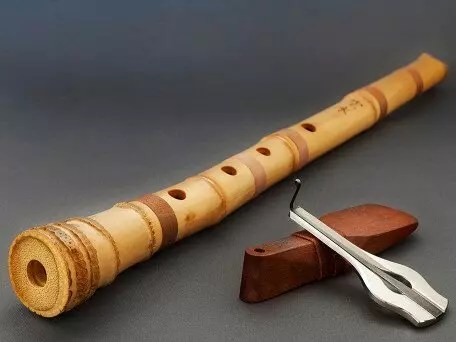
The shakuhachi is actually a Japanese wind instrument that derives from Chinese wind instruments. It is traditionally held vertically like the Chinese xiao flute. It’s made out of bamboo and has an extremely simple design. There are several different kinds of shakuhachi, some being longer or thicker than others. This instrument was used in Zen Buddhism as part of blowing meditation (also know as suizen). The most common shakuhachi these days is the fuke shakuhachi. True masters of this instrument are said to be able to produce almost any frequency on them, and the skill required to play such instruments is nothing short of amazing.
Kokyu
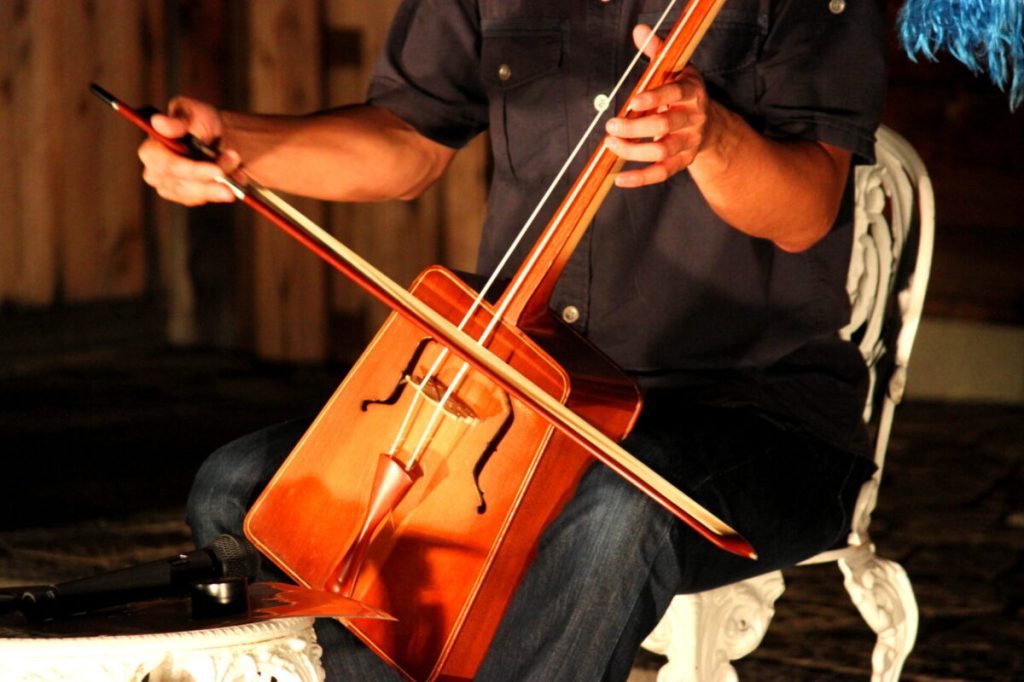
The Kokyu is a string intrsument that is played with a bow (similar to a violin). However, while violins are held horizontally, kokyu are held vertically–like a cello. These small instruments tend to have three or four strings and their form resembles that of a shamisen. Kokyu are generally played alongisde koto and shamisen, though they are also used internatinally in jazz and blues tunes.
Kane
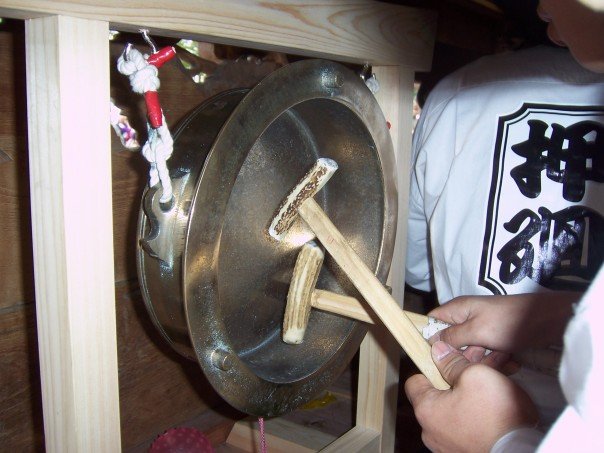
I’m going to make this easy for you–a Kane is pretty much a gong. It’s a dish-shaped bell that is played by hitting on it with a mallet that is referred to as a shumoku. The kane is used in Buddhist and Shinto ceremonies and is said to produce three main sounds: Chi–achieved by hitting the inside edge, Ki–achieved by doing a reverse stroke, and Chan–made by hitting the direct middle of the gong.
Mokugyo
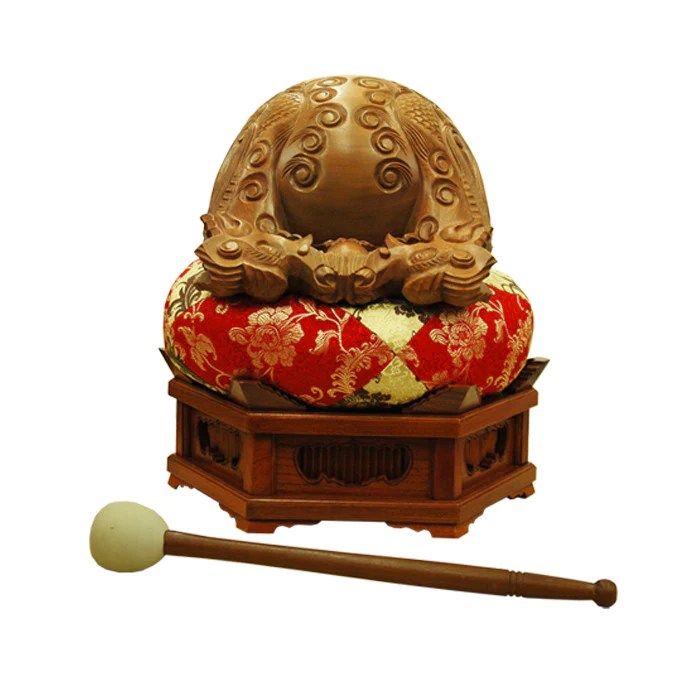
Okay, so this one is a little bit different than the rest. The mokugyo is an instrument that actually derives from ancient China. However, the Mokugyo quickly became a staple in Japanese traditional instruments. It is used frequently in Buddhist chants, often to keep rhythm. This instrument is made out of wood and in the shape of a fish–making it extra cute to look at. There are many different stories behind this instrument and why it is in the form of a fish, with one of the most popular being of a fish who helped out a Buddhist monk in order to atone for sins he’d committed as a human.
Binzasara
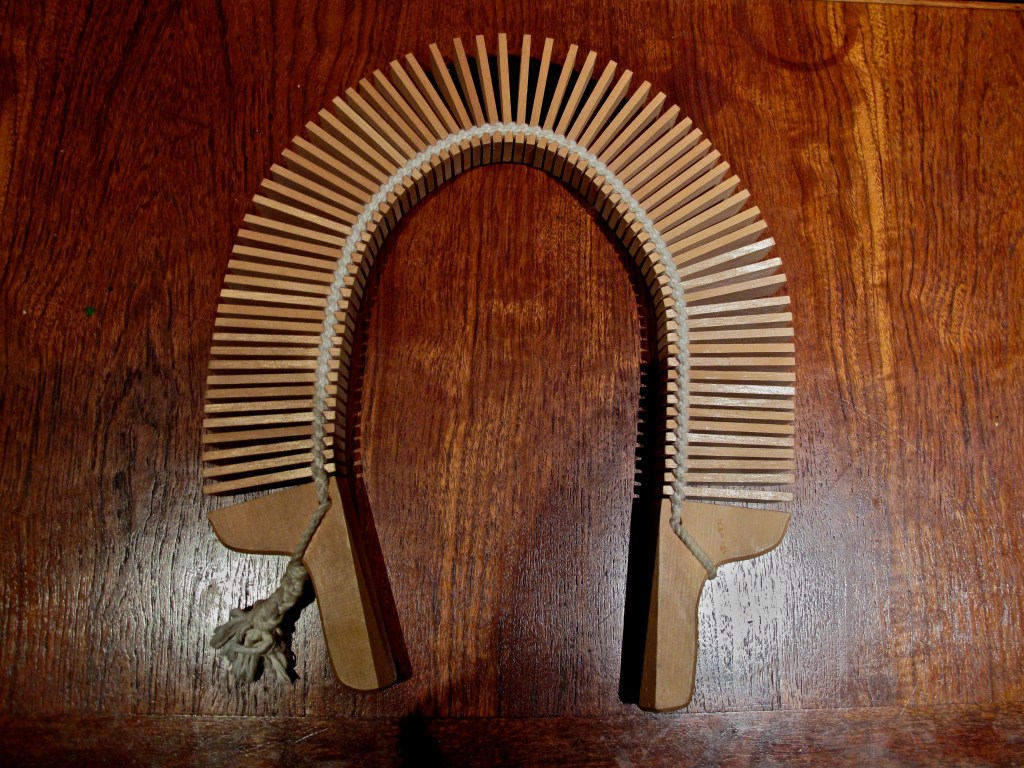
This last instrument is an instrument that looks almost nothing like an instrument. It’s made of 108 pieces of wood that are strung together (it could almost be mistaken for jewelry from afar). At each end is a small handle made of wood as well. In order to play this instrument, the most you need to do it make is by moving the pieces like a wave. This instrument is none other than the instrument that was never intended to be an instrument–the binzasara. What was originally a cleaning tool became a popular instrument used in Japanese folk music
I can’t believe I did it–I can’t believe I managed to introduce another five traditional Japanese instruments and still have so many I didn’t touch on! Over the course of past Hotsui Matsuri’s, I’ve been consistently introducing new instruments to the point that we’ve now covered fifteen traditional instruments. The real question is, do you enjoy these? Should I bring them out again for next year’s Hotsui Matsuri? Let me know because I truly do enjoy seeking out these traditional instruments! What started as my fascination for the koto in Koto no Tomare has become a passion for discovering traditional instruments. Thanks for humoring me in my discoveries, and until tomorrow!
Stay weebtastic!
xoxo
Luna
 We be bloggin'
2 thoughts on “Day 4 of Hotsui Matsuri: Highlighting More Traditional Instruments”