Welcome to day 4 13 days of Otakutober 2026! It’s time for another blog addition to our Japanese folklore series Nihongo Legends, this time expanding into a brief explanation of the afterlife’s so below, Japanese Hell.
I, Star, will start by saying there isn’t just one Hell. In the Buddhist religion (which is echoed in various ethnic groups as well), the native religion of Japan, there are many Hells, each specializing in a specific kind of torture for a specific kind punishment. But let’s back up a little further.
Japanese Hell is called Naraka which is described as a place generated by negative karma. It’s governed by a God of Hell named Yama and wardens that are managers and supervisors of others Based upon actions that people have done in their lives determines the hell one person will endure to “burn off” the karma. There are 8 major Hot Hells and 8 major Cold Hells that houses various different punishments. Below I’ve listed their original names in romanized Sanskrit and Japanese.
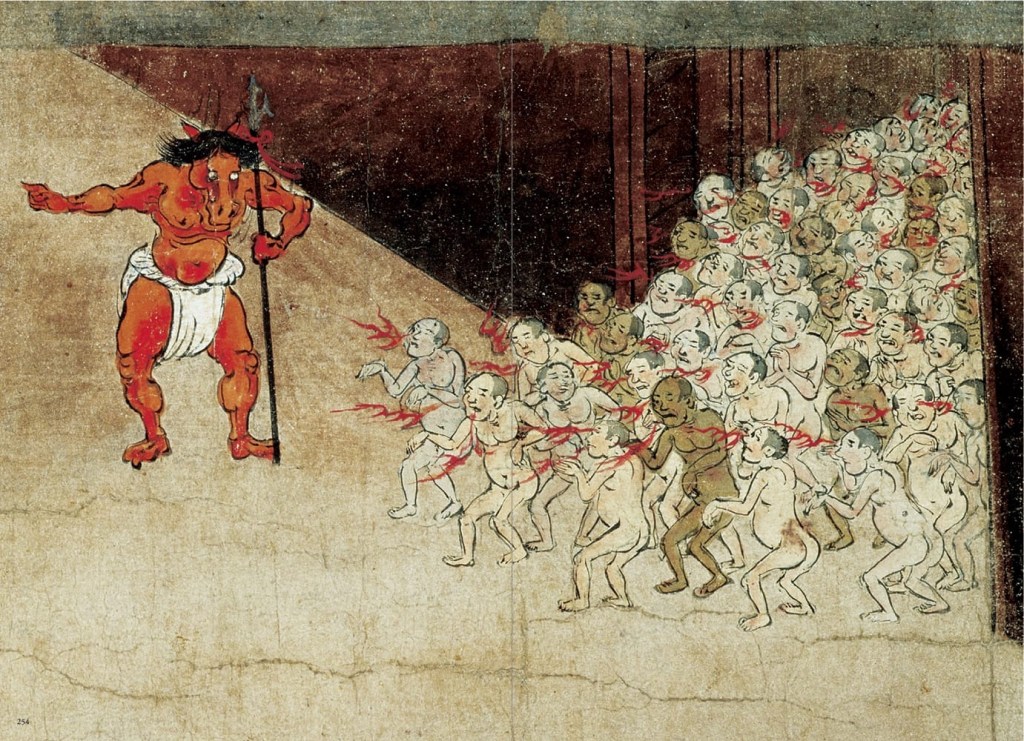
8 Hot Hells
Typically made to punish physical crimes:
- Sañjīva (Takatsu Jigoku) means “reviving” meaning the inhabitants here revive instantly after being hacked and cut.
- Kālasūtra (Kokomo Jigoku) means “measuring line” where wardens mark the inhabitants laying on hot coals then cut its 6-18 pieces.
- Saṃghāta (Shugo Jigoku) means “crushing together”. There are two methods, one crushes and grinds inhabitants into dust between two fiery mountains. The other is iron rollers in every direction that crush inhabitants waist deep in iron sheets.
- Raurava (Kyokan Jigoku) means “screaming net” bodies entangled in bronze nets with flames that go through every opening in the body.
Made for vocal crimes:
- Maharaurava (Daikyokan Jigoku) means “screaming smoke” deadly acrid smoke enters every opening in the body.
Made for mental crimes:
- Tāpana (Shonetsu/Ennetsu) means “roasting” bodies are impaled on stakes the size of palm trees and set ablaze.
- Pratāpana (Daishonetsu/Daiennetsu/Gokunetsu) “the great roasting” wardens force inhabitants to climb a blazing fiery mountain only to be blown off and impaled by spears below.
- Avīci (Mugen/Abi Jigoku) means “without interruption or any space left” which means there’s no room in between the hellfire flames.
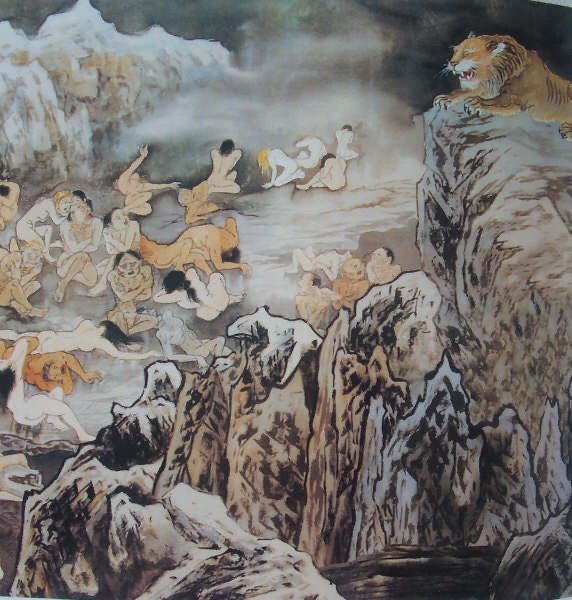
8 Cold Hells
- Arbuda (Abuja) meaning “Blisters” the inhabitants are made to wander naked and alone in an icy, blizzard climate until their bodies are covered in blisters.
- Nirarbuda (Nirabuda) meaning “bursting blisters” an even colder climate that causes blisters to burst.
- Aṭaṭa meaning the literal sound of shivering or chattering teeth.
- Hahava (Kakaba) meaning the sound of coldness when repenting.
- Huhuva meaning the sound of groaning in pain.
- Utpala (Ubara) is the color of a water lily and this Hell is also known as Blue Lotus Hell this is like intense cold that turns skin blue.
- Parma (Wadoma) is the is known as the Crimson Lotus Hell where blizzards freeze skin and crack it open leaving inhabitants raw and bloody.
- Mahāpadma (Makawadoma) meaning great crimson lotus Hell cracks the entire inhabitant’s body in pieces exposing their internal organs to the cold for cracking.
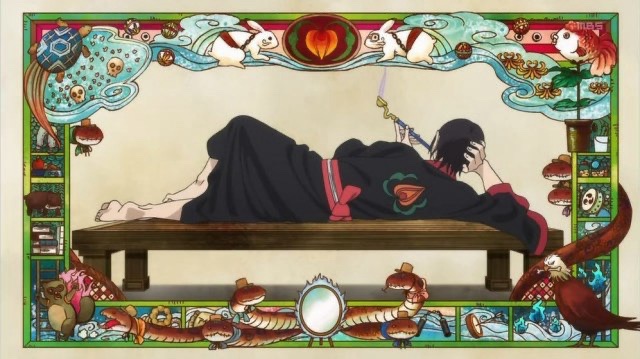
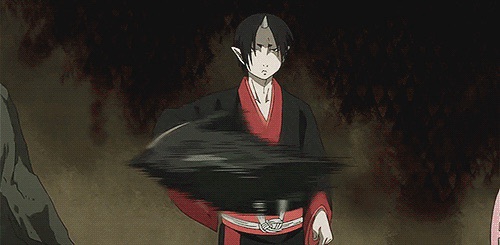
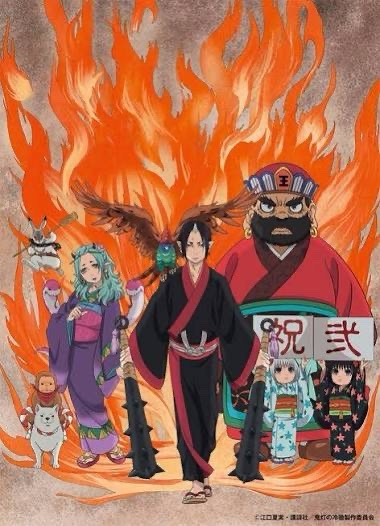
There are many descriptions of what it looks like outside the hells so there’s a lot of lore to caught up on. Personally, I like Hozuki’s coolheadedness as my favorite depiction. It’s a playful explanation with a twist of modern slice of life work life. See you in the next one!
AishiteLOVEru~
Star


Leave a Reply